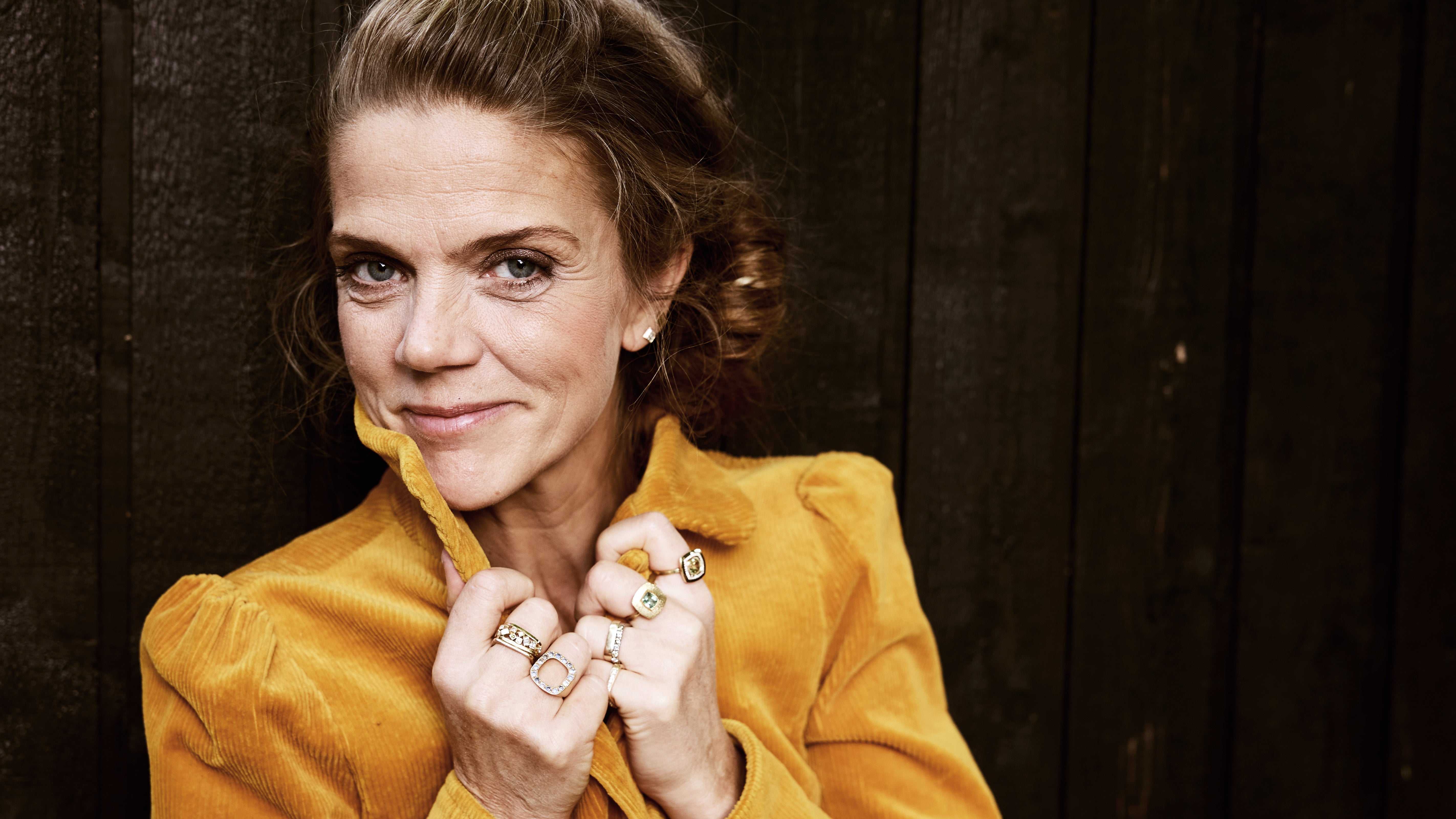
Article: Caroline and Benjamin Freisfeld
Dear Caroline, dear Benjamin Freisfeld, you have been managing the Brahmfeld & Gutruf jewelry house since 2010. What comes to mind when you hear “aveluene”?
Benjamin: We took a very close look at the platform and the other partners before we said yes. And that was actually the moment we knew: this is where we belong. There was a gap - and we could fill it. What convinced us was less the concept than the people behind it. Yasmin and Julika bring a spectrum of experience that is rarely found together. You notice that in the selection they make - there's judgment there, no arbitrariness. Whoever curates must also have the courage to say no. You can see that courage.
Caroline: Jewelry in the digital space only works if the platform's signature is strong enough to carry the piece. At aveluene, it is.
Brahmfeld & Gutruf has existed since 1743 and is one of Germany's oldest jewelry houses. What has ensured its longevity over all these years?
Benjamin: Hamburg. Sounds simple, but there's a lot behind it. This city was never ruled by a crown or a church - always by its free citizens. This spirit has shaped the house from the beginning. Brahmfeld & Gutruf was never a court purveyor in a subservient sense - they supplied the Tsar, yes, but they were always their own masters. This commercial independence and the uncompromising quality standard, which is reflected in every piece with the BG 1743 hallmark - that is the foundation.
Caroline: In addition, we never chased after the zeitgeist, but we also never turned our backs on it. Hamburg's jewelry culture thrives on the surprising within a refined framework. Bold and elegant - and both at the same time. That was the case in 1743, and it is still the case today.
The house has always been managed jointly by married couples. What many find challenging seems to be your recipe for success. What is the magic formula?
Caroline: (laughs) Magic formula sounds too simple. It's more an honest division of labor that arises from genuine mutual respect - not from an agreement that is put on paper. Benjamin thinks in structures, in contexts, in the big picture. I think in colors, in forms, in stories.
Benjamin: And neither of us would think of encroaching on the other's territory. It was no different for the founders of the house - when Johann Georg Gutruf married Emilie Brahmfeld's daughter and thus gave the house its double name, it was not an acquisition, but a complement. The house has never abandoned this principle.
Caroline: The decisive factor is perhaps: You have to be willing to have uncomfortable conversations together. But at the end of the day - literally - you go home together.
What fascinates you most about this craft?
Caroline: The fact that much has remained the same here. A good goldsmith needs the same dexterity as 300 years ago. No algorithm in the world can set a stone cleanly. This grounding in the craft, in the material, in the time a piece takes - that is almost revolutionary in a world of acceleration.
Benjamin: And it is one of the few industries where a piece is truly made for generations. What we sign should still stand in a hundred years. That is a responsibility that keeps you upright every day.
Do you both have a personal favorite gemstone?
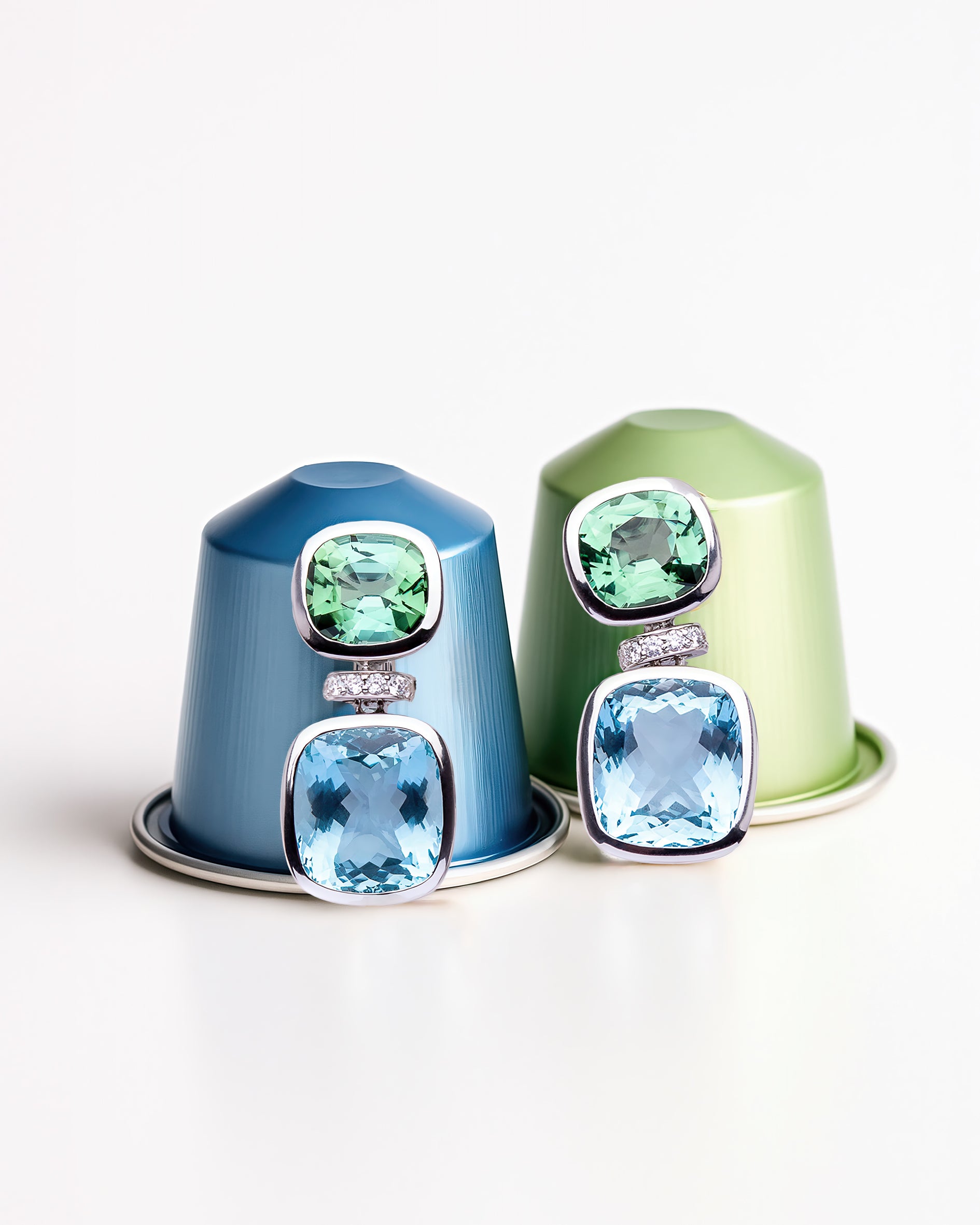
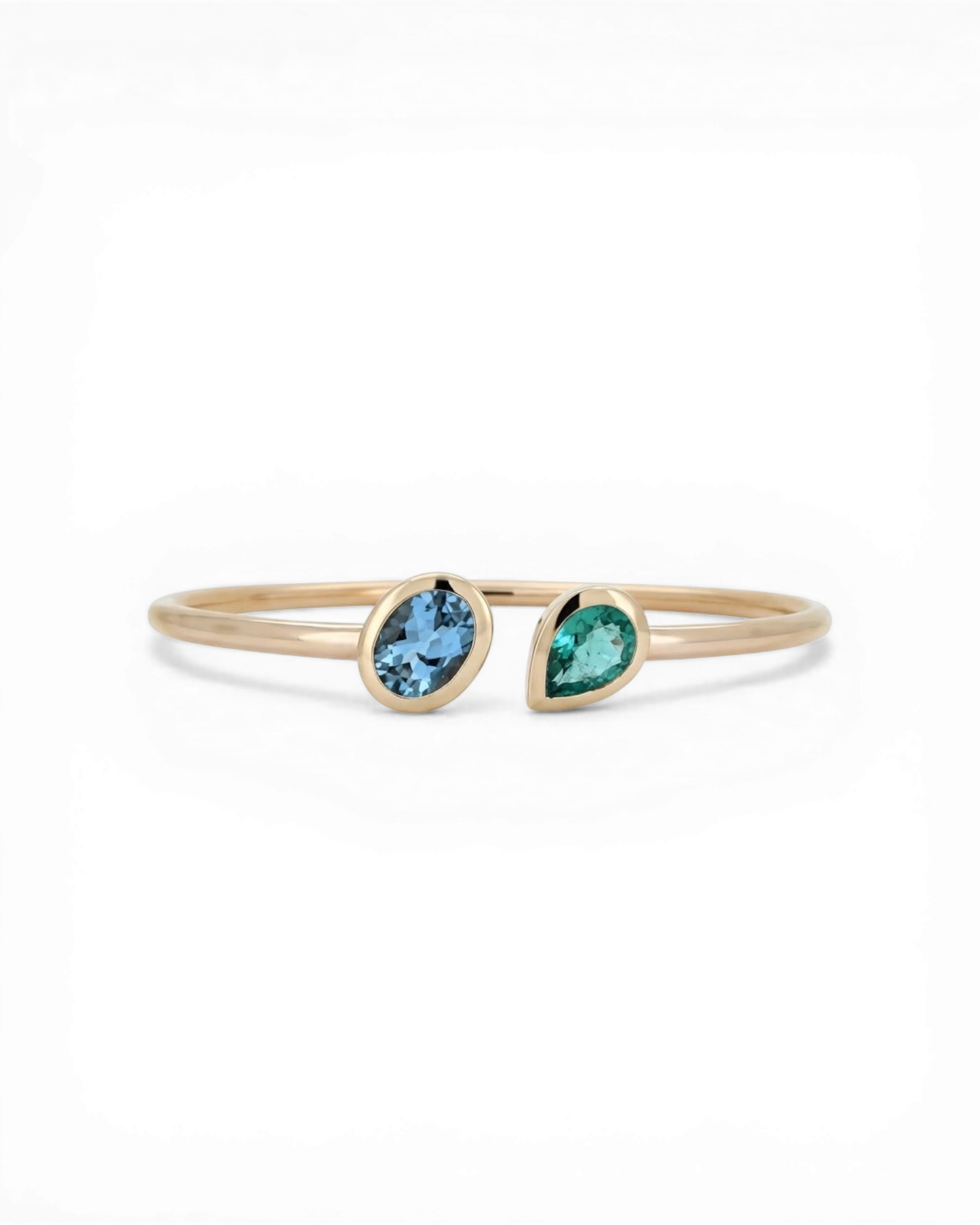
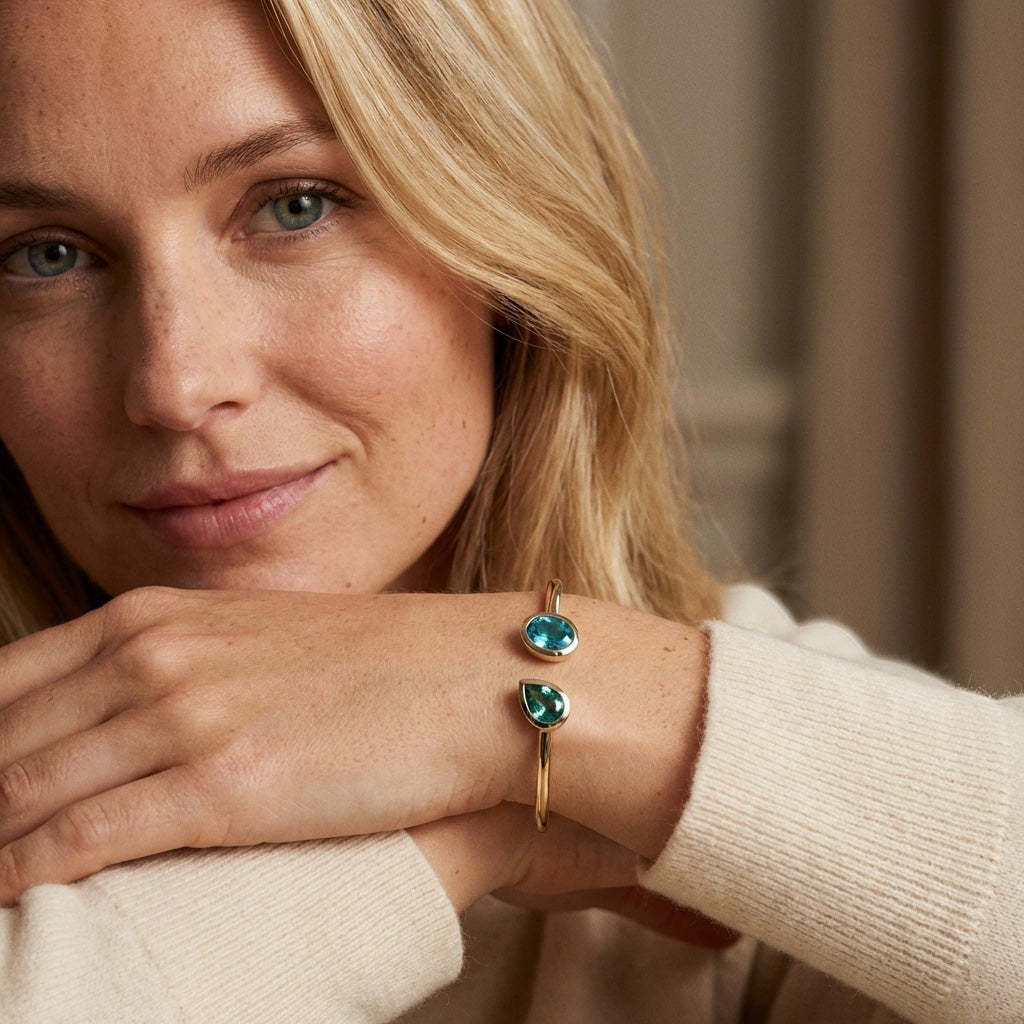
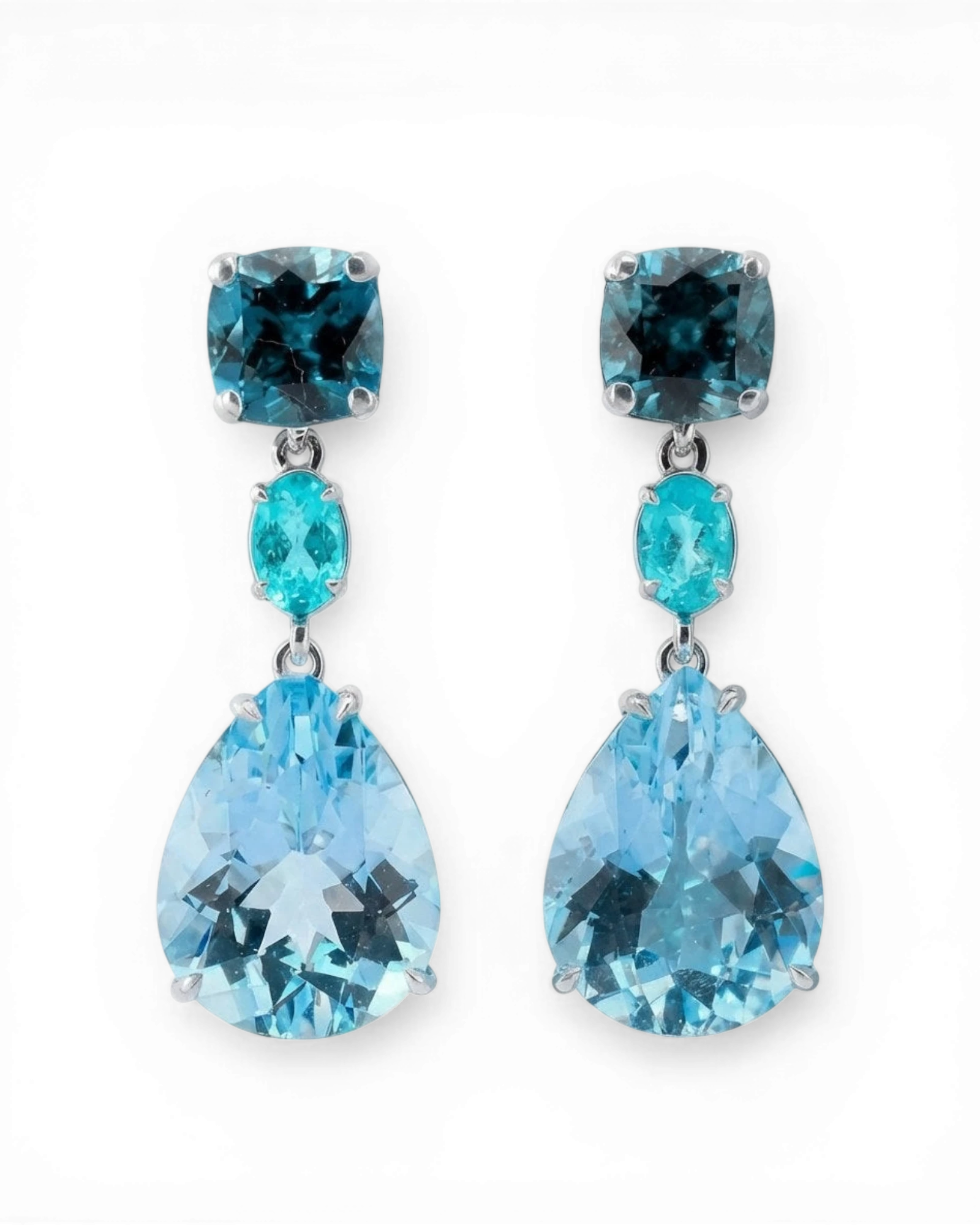
Caroline: I am hopelessly in love with Paraíba tourmalines. This electric blue-green - as if the sea were glowing. You see them and immediately want to turn them into a piece.
Benjamin: I tend towards sapphires. Not because of the expected, but because of the range - from this deep royal blue to an almost lavender violet. A good sapphire tells more than a good painting.
What does your design process look like? What inspires you?
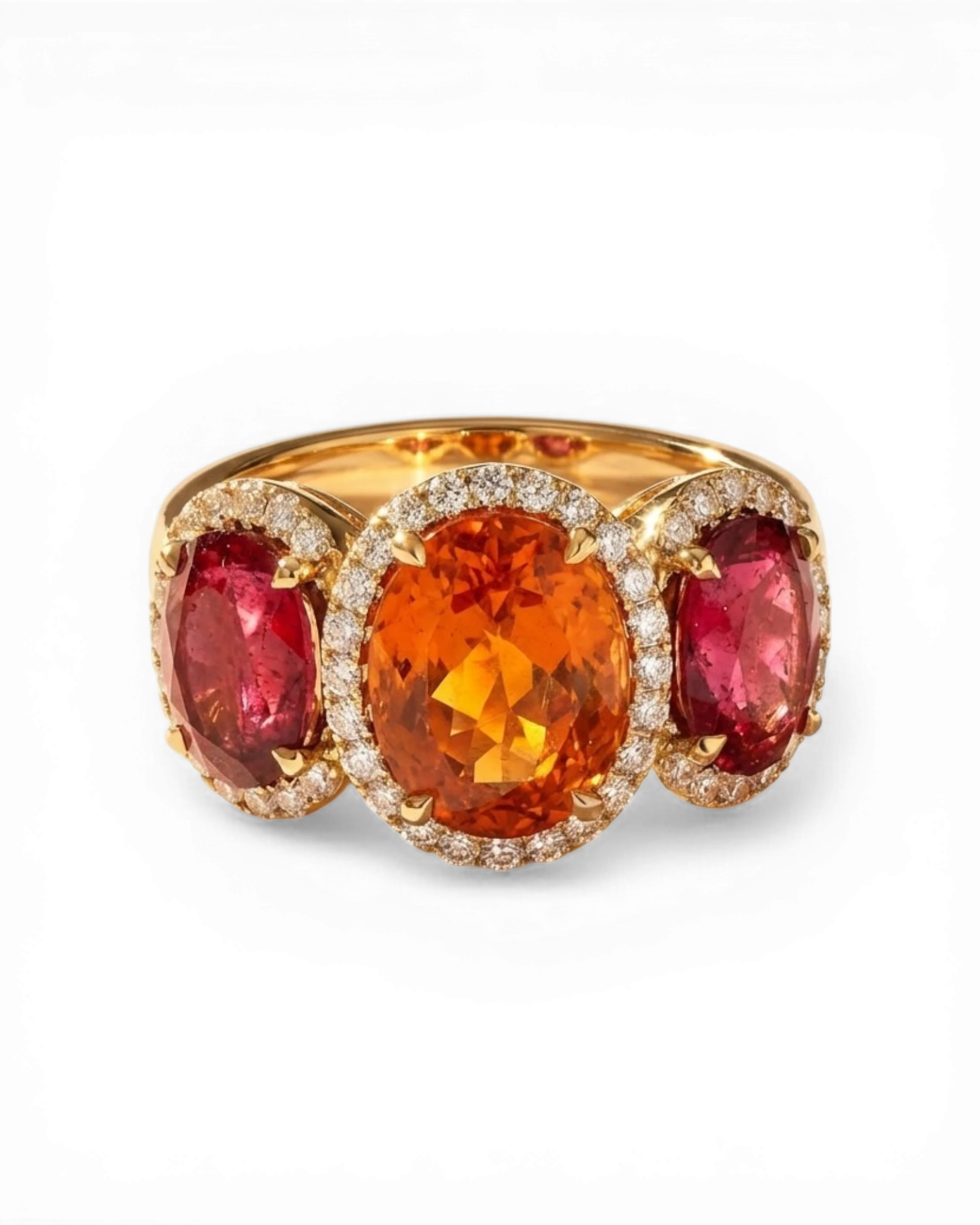
Caroline: It almost always begins with a stone. We first look for the stone - hand-picked, often at trade fairs or directly from dealers we have trusted for years. The stone tells us what it wants to become. Form follows material, not vice versa.
Benjamin: Hamburg always plays a role. The light here, the water, this mixture of Hanseatic sobriety and genuine cosmopolitanism. Our pieces should reflect exactly that: surprisingly colorful, but never loud. They know their own dignity.
Caroline: And then, of course, the atelier. The craftsmanship pushes back. What sounds elegant on paper must also remain honest in gold and stone.
Do you remember a piece of jewelry that particularly fascinated you?
Benjamin: A favorite piece of jewelry - I can't really name one. My relationship with the individual pieces is too great and too varied for that. What always fascinates me: I rediscover jewelry when it finds its wearer. A piece changes with the person who wears it - it gets a different resonance, sometimes a completely different meaning. The design alone often plays a subordinate role.
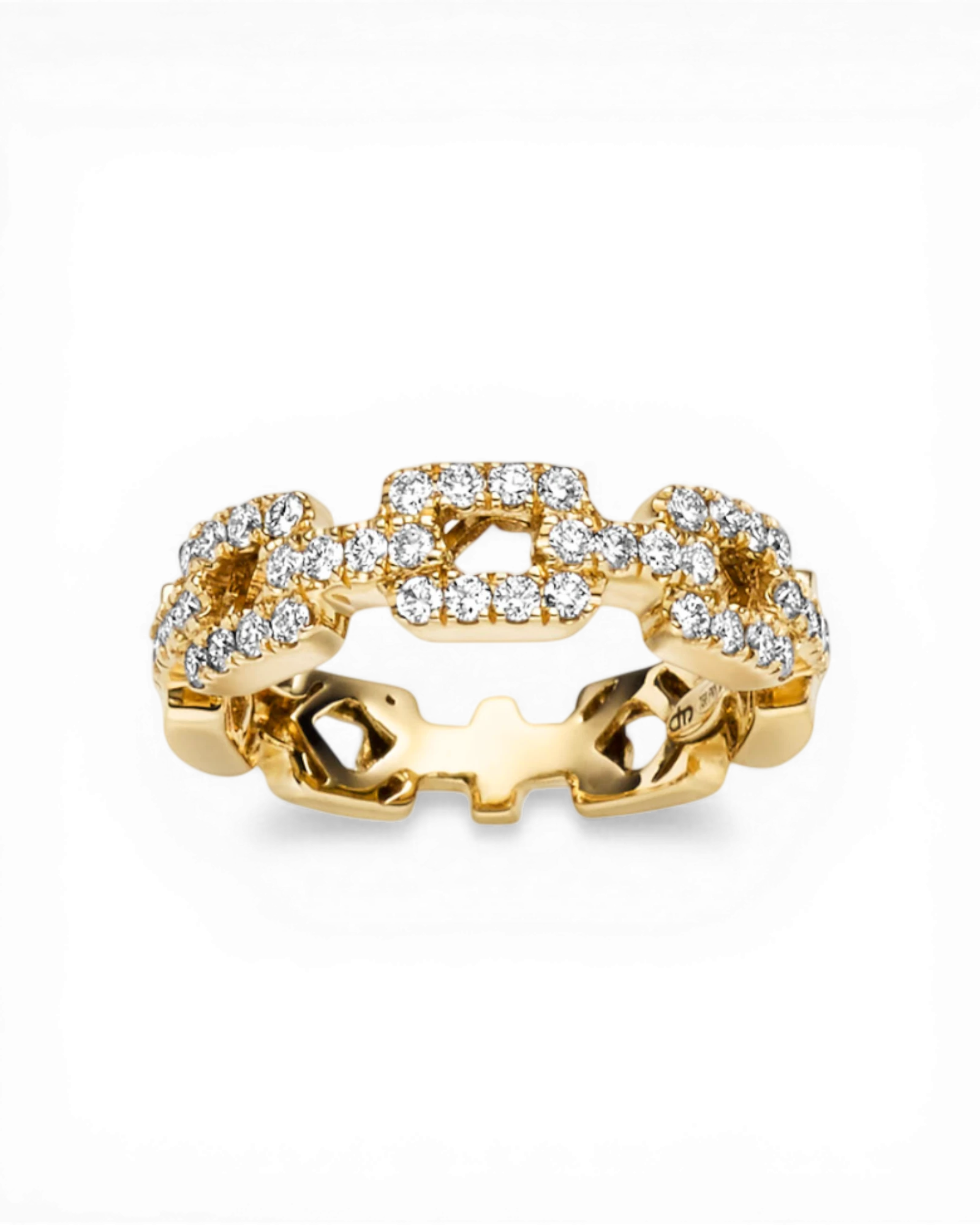
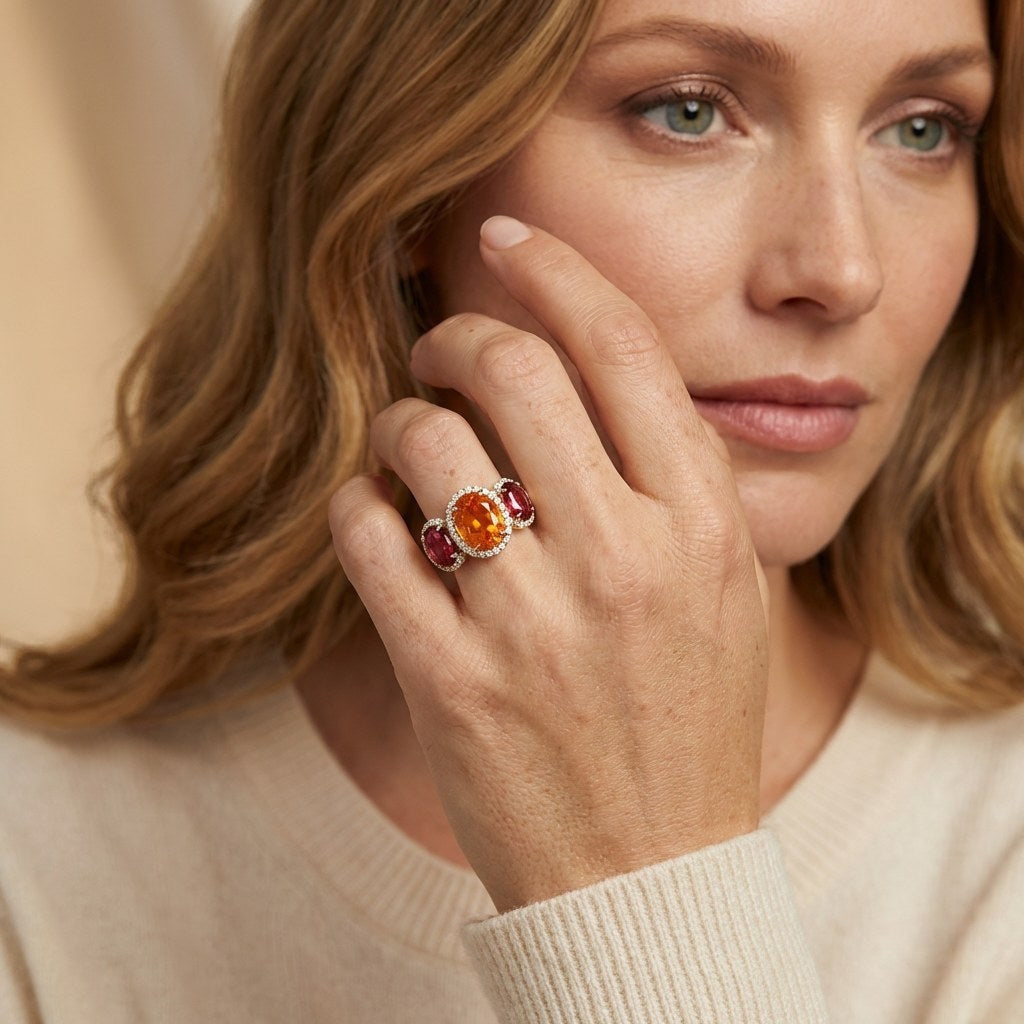
A story that I really enjoyed at the time: A customer came to us with a beautiful Santa Maria aquamarine that she had inherited - originally a large pendant. She had set her mind on wearing it as a ring. The stone weighed almost 160 carats. It took several prototypes, but in the end, a beautiful ring from our Étapes collection was created: strict forms, over 60 grams of gold, almost 5 carats of baguette diamonds, but absolutely wearable. The ring stands out through its simplicity and yet is imposing. Surprisingly Hanseatic!
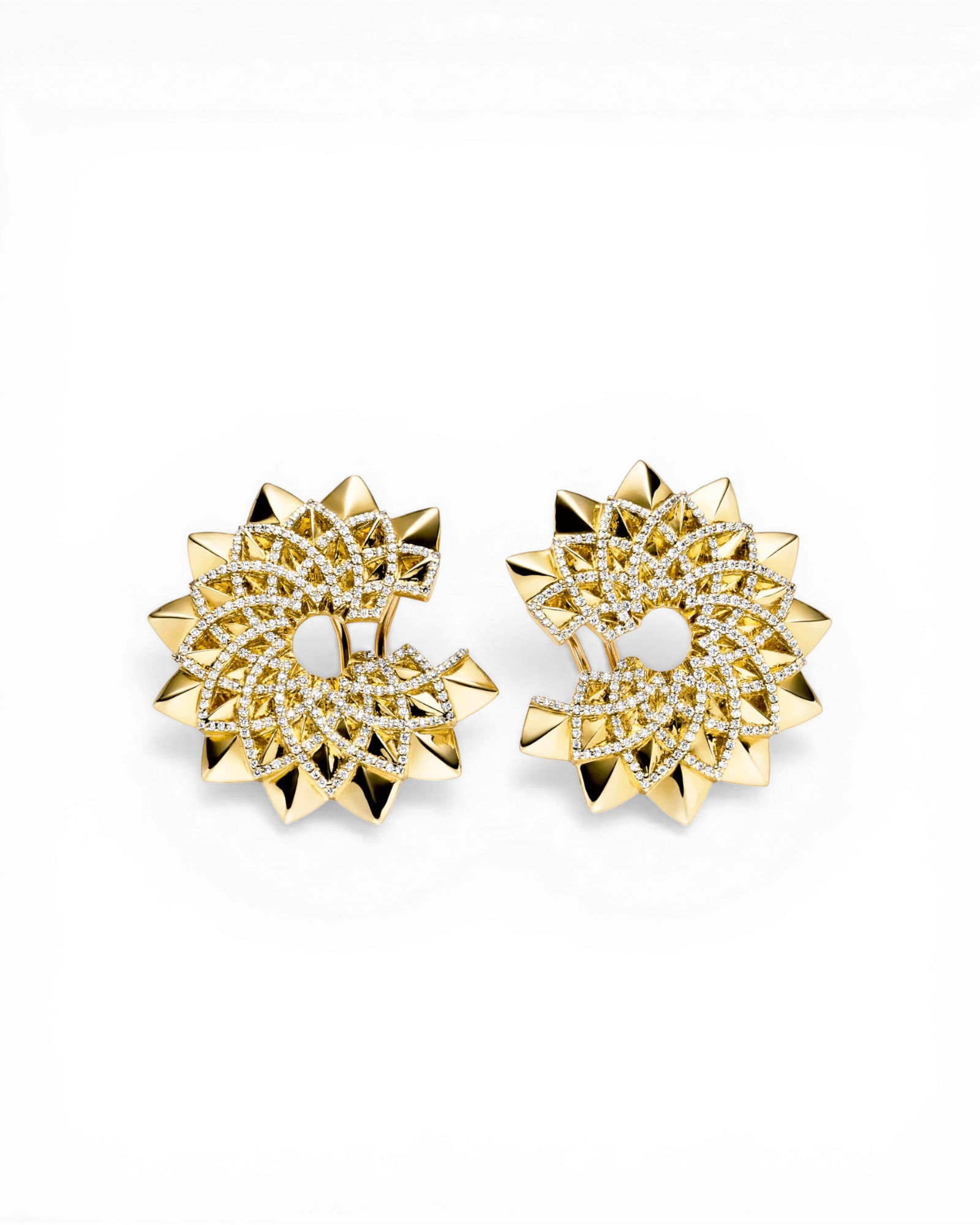
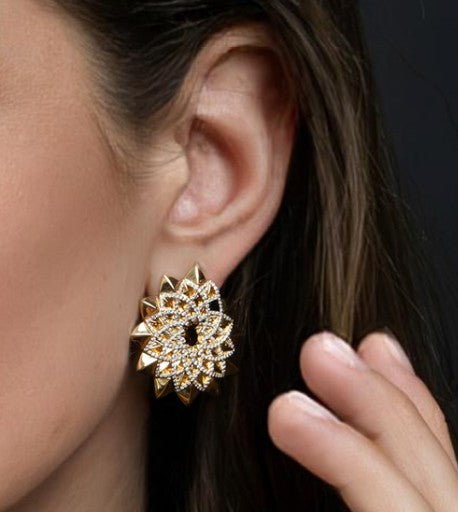
Caroline: My favorite jewelry often changes - daily, weekly, monthly. Actually constantly. At the moment, however, I often return to our large Artichaut earrings. The collection was born from a very simple observation: that nature invents forms that no designer can improve upon. The artichoke - strict, geometric, and at the same time of an almost organic sensuality. Gold and diamonds, and yet not a gram too much. I wear them myself, and I keep finding myself touching them and rediscovering them. For me, that's a sign that something has really succeeded.
Jewelry is often given on special occasions. Do you remember a particularly beautiful story from a buyer?
Benjamin: A well-known German philosopher came to us with his wife, looking for a ring. He simply didn't give us an opportunity to sell it to him - he took care of that himself. With a poetry and eloquence that still captivates me today. What he said about this piece was not a description - it was a declaration of love. Spoken aloud, to his wife, right in our house. We stood by and just listened. One was moved. One was proud. And one had the feeling of being allowed to accompany one of those moments that you don't plan and don't forget. A disarmingly honest moment.
Caroline: Not long after, he unfortunately passed away. And with him that voice, those words. But the ring is still there - and with it everything it means. That's the promise that good jewelry keeps: It outlives us. It carries on what we can no longer say.
What advice do you give someone buying their first piece of jewelry?
Benjamin: Don't buy anything you're indifferent to. Price plays a lesser role than resonance. A piece that looks at you and you look back - that's the right one.Caroline: Don't hesitate too long. Jewelry is not a rational decision - and that's a good thing. If you look at a piece and it looks back at you, then that's your piece. Life is short. Go for it.